The actual processing effect of microwave drying on dried scallops and clams
The drying process of common dried seafood such as scallops and clams directly affects the appearance, taste, and...
About Production Shipment
For conventional customized equipment, we will complete the production in 7-15 days, the equipment could be shipped after your confirmation.
If available, it can be delivered directly.
Service commitment
After the arrival of the equipment, we will assign professional after-sales personnel to go to site for installation, guidance, commissioning, training, etc.
For those equipment cannot be installed on site, we will provide one-to-one video guidance for installation.
After sales service commitment
Within the agreed warranty period, all components of the equipment will be provided free of charge. Provide lifelong technical maintenance and repair services.
Tel:+86 53188965205
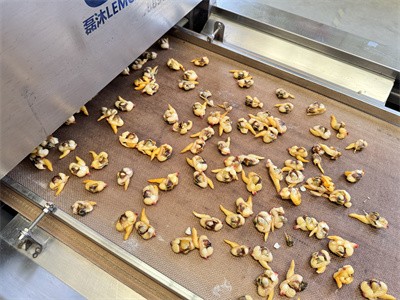
The drying process of common dried seafood such as scallops and clams directly affects the appearance, taste, and storage period of the dried seafood. In recent years, microwave drying has gradually been applied in the processing of shellfish and seafood. With its unique heating principle, it is suitable for materials such as scallops, clams, and fresh shrimp.
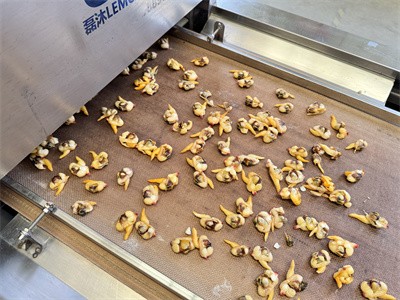
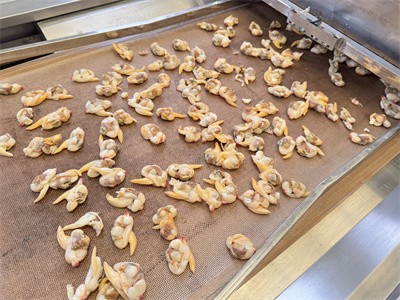
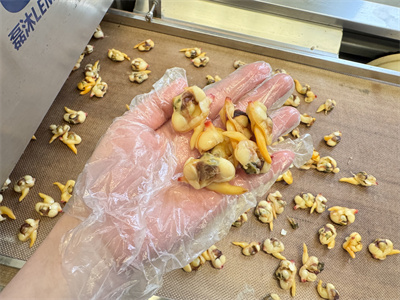
Unlike traditional heat conduction drying from the outside to the inside, microwave drying is an integral infiltration dehydration method that relies on electromagnetic fields to generate heat through high-speed friction of water molecules inside the material, achieving synchronous evaporation of water from the inside out. The dried scallops and clams after processing have uniform humidity and a stable overall moisture content. The dried goods are fully formed and evenly dried, with very little cracking or crushing.
The advantages of microwave low-temperature drying are particularly prominent in terms of flavor and flavor preservation. Moreover, the microwave drying speed is fast, which can effectively lock in the natural seafood of scallops and clams. The finished product has a natural and transparent color, without blackening, yellowing, or burning. At the same time, the finished product has good rehydration properties, and the meat is plump and tough after soaking.
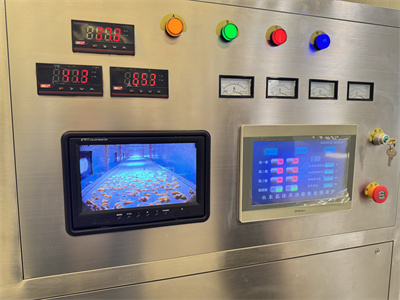
In addition, microwave processing has the effect of low-temperature sterilization and insect egg killing. Scallop and clam fresh materials are prone to carrying bacteria and parasitic eggs, which is the main reason for the spoilage of dry goods during storage. The thermal and non thermal effects of microwaves can complete sterilization and antibacterial treatment at low temperatures, effectively reducing the total number of bacterial colonies, extending the storage time of dry goods at room temperature, and ensuring that the entire processing process is enclosed and dust-free, with no impurities or contamination, resulting in a high food safety factor.
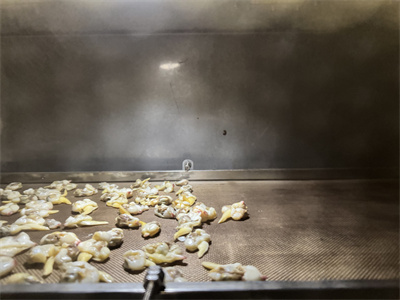
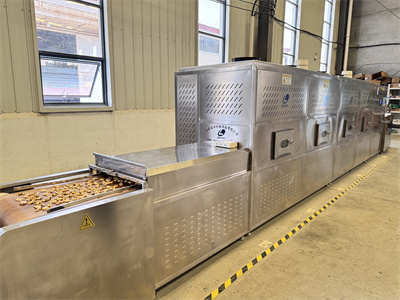
From the perspective of processing efficiency and energy consumption, microwave drying greatly simplifies the processing flow. The traditional drying method takes several tens of hours, while microwave can significantly shorten the drying time and adapt to large-scale continuous production. Moreover, microwave energy only acts on the moisture content of the material, with no excess heat loss. Compared to traditional processes, it has lower energy consumption and a clean processing environment without the generation of exhaust gas or wastewater, making it suitable for standardized seafood processing workshops.





 QQ
QQ