What properties of chemical powders cannot be dried in a microwave tunnel oven
Microwave tunnel ovens are widely used in the drying and processing of chemical powders due to their advantages ...
About Production Shipment
For conventional customized equipment, we will complete the production in 7-15 days, the equipment could be shipped after your confirmation.
If available, it can be delivered directly.
Service commitment
After the arrival of the equipment, we will assign professional after-sales personnel to go to site for installation, guidance, commissioning, training, etc.
For those equipment cannot be installed on site, we will provide one-to-one video guidance for installation.
After sales service commitment
Within the agreed warranty period, all components of the equipment will be provided free of charge. Provide lifelong technical maintenance and repair services.
Tel:+86 53188965205
Microwave tunnel ovens are widely used in the drying and processing of chemical powders due to their advantages of fast drying speed, uniform heating, and energy conservation and environmental protection. However, not all chemical powders are suitable. Blind use not only damages equipment and causes powder deterioration, but may also lead to safety accidents. Let's take a look together. Which chemical powders cannot be dried in a microwave tunnel oven?
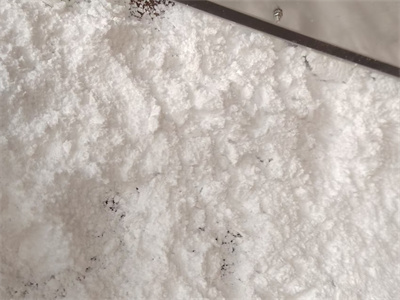
Firstly, flammable and explosive chemical powders are strictly prohibited from use. Microwave heating is a direct internal heating process with an extremely fast heating rate. Flammable and explosive powders can easily reach their ignition or detonation points during the rapid heating process. This type of powder not only rapidly heats up and self ignites in a microwave field, but the powder dust may also form explosive mixtures with air, causing detonation and explosion, seriously threatening production safety. Therefore, it cannot be dried in a microwave tunnel oven.
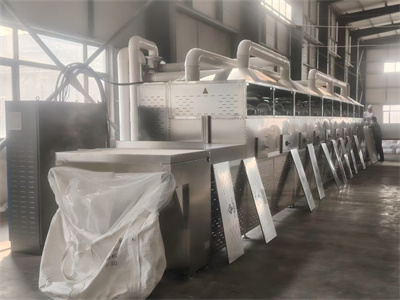
Secondly, there are highly thermally sensitive chemical powders. This type of powder has unstable chemical properties and is extremely sensitive to temperature changes. It will decompose, denature, and discolor upon slight heating, losing its original chemical properties. Although microwave heating is uniform, the overall temperature rises rapidly and cannot be controlled slowly or gently. Some organic pigments, thermosensitive resin powders, etc. will quickly decompose under microwave drying, producing harmful substances. Not only will the product be scrapped, but it may also release toxic gases, polluting the environment and endangering the health of operators.
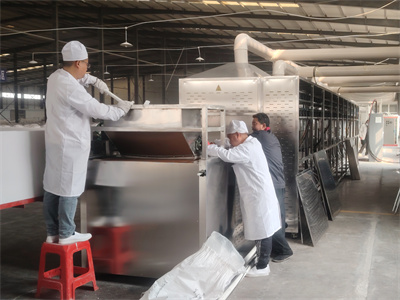
Furthermore, there are chemical powders containing metallic components. Microwaves will reflect when they come into contact with metals, and will also generate electric sparks and arcs. If metal powder, metal ion crystals, or powder particles are mixed into chemical powder, or if metal impurities are wrapped in powder particles, the metal substance will reflect microwaves after entering the microwave tunnel furnace. This not only causes uneven drying of the powder, but also makes it difficult to heat and dehydrate locally. What is more dangerous is that it may cause ignition, which can damage microwave equipment components or ignite the powder, leading to a fire. Therefore, metal containing chemical powder is not suitable for this equipment.

Then there are chemical powders that do not absorb microwaves. The principle of microwave drying relies on the high-speed friction and heat generation of polar molecules (mainly water molecules) inside the material to complete dehydration and drying. If the chemical powder itself is a non-polar molecular structure that hardly absorbs microwaves, after being placed in the equipment, the microwaves will directly penetrate the powder and cannot be converted into heat. The powder neither heats up nor dehydrates, and the drying operation is completely ineffective, only wasting electricity and occupying equipment capacity. This type of powder can be dried with traditional hot air without the need for a microwave tunnel oven.





 QQ
QQ