Wheat germ powder is a versatile food ingredient, but fresh wheat germ powder has obvious shortcomings. It not only has a fishy smell and a rough taste, but also contains active enzymes and is susceptible to problems such as oil oxidation, deterioration, and sourness due to the influence of water and microorganisms. It is stored at room temperature for a short time and difficult to achieve long-term storage and circulation.

The microwave baking method is completely different from traditional heating. It adopts the principle of penetration heating, where microwave energy directly acts on the water molecules inside the wheat germ powder, causing them to rapidly vibrate and rub to generate heat, achieving simultaneous heating of both the inside and outside of the material, without waiting for the heat to slowly penetrate from the surface to the inside like traditional baking. During this process, in just a few minutes, the wheat germ powder can be evenly heated, quickly triggering a strong wheat aroma and removing the original fishy smell. The roasted germ powder has a rich aroma and mellow taste, whether brewed directly or added to complementary foods and foods, the taste can be greatly improved.
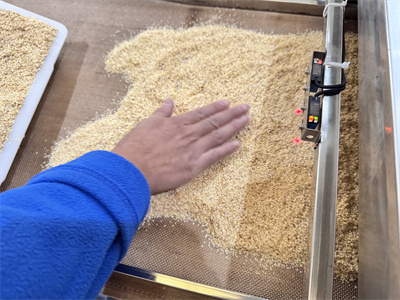
In addition to its excellent roasting effect, the microwave also completes inactivation treatment, which is the core of extending the shelf life of wheat germ powder. The inactivation here mainly involves killing active enzymes such as lipase and protease in embryo powder, as well as eliminating harmful microorganisms such as mold and insect eggs. The reason why fresh wheat germ powder is prone to spoilage is that active enzymes continuously break down the oil in the germ, causing it to become rancid and spoiled. The growth of microorganisms also accelerates the spoilage of the food.
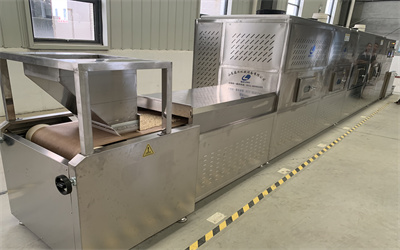
During the rapid heating process at low temperatures, microwave tunnel ovens can inactivate enzymes, terminate their decomposition reactions, and destroy the cellular structure of microorganisms, achieving bactericidal and bacteriostatic effects. And the entire processing process is temperature controlled, without the problem of high temperature damaging nutrients, which can preserve the nutrients in wheat germ powder as much as possible. After inactivation treatment, the moisture content of wheat germ powder can also be rapidly reduced, reducing the conditions for microbial reproduction and fundamentally preventing oil oxidation and food spoilage.




 QQ
QQ