Comparative analysis of three mainstream sterilization processes for spices
Spices are the core auxiliary materials in food processing, covering various forms such as powder, granules, and whole grains.
About Production Shipment
For conventional customized equipment, we will complete the production in 7-15 days, the equipment could be shipped after your confirmation.
If available, it can be delivered directly.
Service commitment
After the arrival of the equipment, we will assign professional after-sales personnel to go to site for installation, guidance, commissioning, training, etc.
For those equipment cannot be installed on site, we will provide one-to-one video guidance for installation.
After sales service commitment
Within the agreed warranty period, all components of the equipment will be provided free of charge. Provide lifelong technical maintenance and repair services.
Tel:+86 53188965205
Spices are the core auxiliary materials in food processing, covering various forms such as powder, granules, and whole grains. These types of agricultural and sideline products are highly susceptible to contamination by microorganisms such as mold and bacteria during the picking, transportation, and storage processes, directly affecting the shelf life and food safety of the products. At present, the mainstream sterilization methods in the industry are steam sterilization, microwave sterilization, and irradiation sterilization. The three process principles are different, and they have their own advantages and disadvantages in material quality, production efficiency, production cost, and market adaptability, which are suitable for different spice processing scenarios.
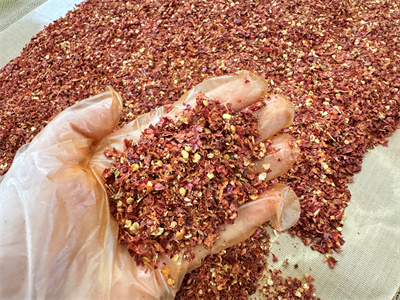
Steam sterilization is a traditional wet heat sterilization process that relies on high-temperature water vapor at 115 ° C to 121 ° C to permeate materials, denaturing microbial cell proteins through high temperature to achieve sterilization effect. This process equipment has low investment and can effectively kill harmful spores, making it suitable for hard, low value-added bulk whole grain spices such as cinnamon and grass fruit. But the disadvantages are very obvious. High temperature and high humidity environments can cause the loss of volatile essential oils in spices, resulting in a lighter aroma and a decrease in spiciness. At the same time, the powder is prone to water absorption and clumping, and must be dried again after sterilization. This not only damages the appearance of the material, but also increases the processing steps and energy consumption, making it unsuitable for high-quality spice production.
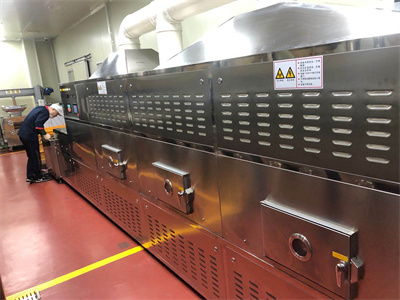
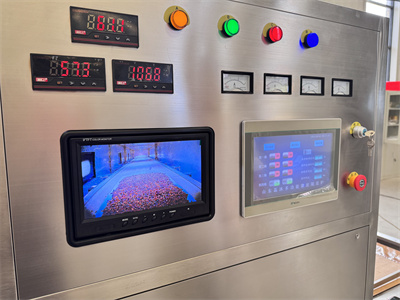
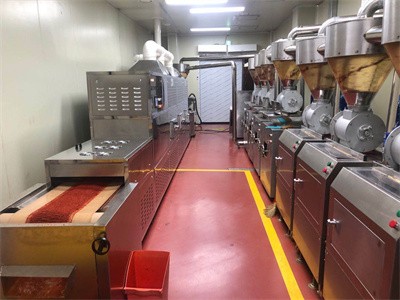
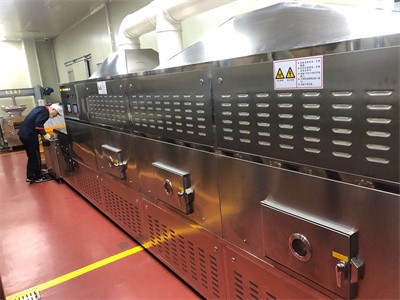
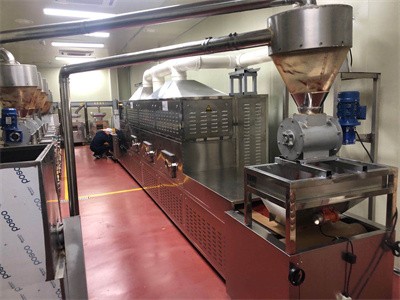
Microwave sterilization is a modern physical low-temperature sterilization technology that uses electromagnetic waves to penetrate materials, causing water molecules inside spices to generate heat through high-speed friction, achieving synchronous and uniform sterilization inside and outside. It belongs to a combination of thermal and non thermal sterilization methods. The entire process is dry processed, with a short time, which can preserve the original color and flavor of the spice as much as possible. The powder is loose and does not clump, without the need for secondary processing. At the same time, the process adopts a tunnel type continuous production mode, which can be connected to the entire production line for crushing and packaging, with high automation and stable production efficiency. However, the effective penetration of conventional 2450MHz microwave is only 3-8cm, and the effect is poor when the thickness exceeds 10cm. In addition, conventional low-temperature microwaves can only perform pasteurization, and it is difficult to completely inactivate high-temperature resistant spores, Aspergillus flavus, etc. To achieve sterilization standards, a significant increase in temperature is required, which will affect the quality of the materials.
Radiation sterilization belongs to cold sterilization technology, which destroys microbial DNA through high-energy radiation. Sterilization can be completed at room temperature without causing material heating or water absorption agglomeration. It has strong bactericidal penetration ability and excellent killing effect on deep microorganisms, but its drawbacks are more prominent. High dose irradiation can easily cause oxidation of spice oils, produce odors, cause fading of spices, and damage the original quality of raw materials. And this process is mostly outsourced, with uncontrollable production cycles and high costs. At the same time, domestic and foreign regulations require that irradiated food must be specially labeled, which to some extent limits the market circulation of the product. It is only suitable for bulk low-priced spice raw materials with low quality requirements and no export restrictions.





 QQ
QQ